


 Cart
Cart
 sales@molnova.com


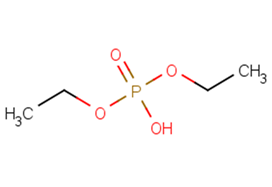
Diethyl phosphate
CAS No. 598-02-7
Diethyl phosphate( Diethyl phosphoric acid )
Catalog No. M20691 CAS No. 598-02-7
Diethyl phosphate a Non-Specific Metabolite of Organophosphorus Pesticides.
Purity : >98% (HPLC)
 COA
Datasheet
HNMR
HPLC
MSDS
Handing Instructions
COA
Datasheet
HNMR
HPLC
MSDS
Handing Instructions
| Size | Price / USD | Stock | Quantity |
| 50MG | 45 | In Stock |


|
| 100MG | Get Quote | In Stock |
|
| 200MG | Get Quote | In Stock |
|
| 500MG | Get Quote | In Stock |
|
| 1G | Get Quote | In Stock |
|
Biological Information
-
Product NameDiethyl phosphate
-
NoteResearch use only, not for human use.
-
Brief DescriptionDiethyl phosphate a Non-Specific Metabolite of Organophosphorus Pesticides.
-
DescriptionDiethyl phosphate a Non-Specific Metabolite of Organophosphorus Pesticides.
-
In Vitro——
-
In Vivo——
-
SynonymsDiethyl phosphoric acid
-
PathwayOthers
-
TargetOther Targets
-
RecptorOthers
-
Research Area——
-
Indication——
Chemical Information
-
CAS Number598-02-7
-
Formula Weight154.1
-
Molecular FormulaC4H11O4P
-
Purity>98% (HPLC)
-
SolubilityDMSO:34 mg/mL (220.64 mM)
-
SMILESCCOP(O)(=O)OCC
-
Chemical Name——
Shipping & Storage Information
-
Storage(-20℃)
-
ShippingWith Ice Pack
-
Stability≥ 2 years
Reference
1.Yang F Li J Pang Get al.Effects of Diethyl Phosphate a Non-Specific Metabolite of Organophosphorus Pesticides on Serum Lipid Hormones Inflammation and Gut Microbiota[J].Molecules. 2019 May 24;24(10).?
molnova catalog



related products
-
Vernoflexuoside
The herbs of Vernonia flexuosa.
-
DL-Menthol
Extracted from Herba Menthae Haplocalycis.
-
Oxypaeoniflorin
Oxypaeoniflorin is a natural product derived from Radix Paeoniae Rubra and Radix Paeoniae Alba.
